
Waterloo at a glance
| Location | 19.9 miles south of downtown St. Louis |
|---|---|
| County / jurisdiction | Monroe County, Illinois |
| Population | about 11,165 (2024 estimate) |
| Typical home built | 1991 (median year built) |
| Housing mix | 75% single-family detached, 8% in 2-4 unit buildings, 12% in larger buildings |
| Owner-occupied homes | 77% |
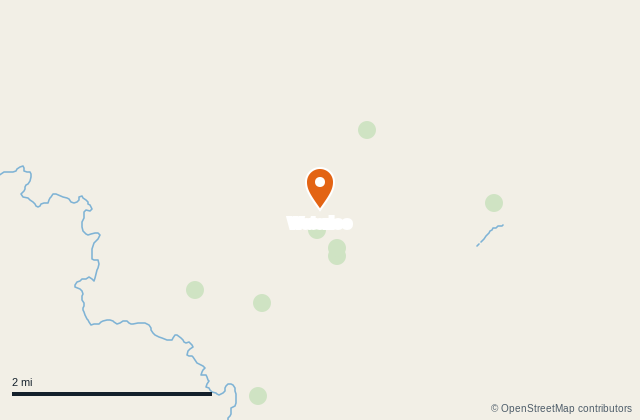
| Nearby creeks & rivers | Kopp Creek (1.6 mi), Fountain Creek (1.9 mi) |
| Parks & green space nearby | Koenigsmark Park, Waterloo Town Square, Waterloo Historic District |
Why entry points show up in Waterloo
Typical construction here dates from the '80s and '90s; mice usually get in at utility penetrations, siding-to-foundation transitions and garage door corners.
Green space such as Koenigsmark Park and Waterloo Town Square supports field and house mice through the summer; when nights cool in the fall, homes along the edges see the first wave indoors.
With about 75% of homes single-family detached, most mouse problems in Waterloo start in attached garages, crawlspaces and basements rather than shared walls.
On homes of this age, exclusion usually focuses on garage door seals and corners, utility penetrations, dryer and bath vents, and roof returns.
Waterloo is in Illinois, where structural pest control businesses are licensed by the Illinois Department of Public Health. Ask any company for its IDPH license number.
Signs to look for
- Daylight visible around garage door corners or utility lines
- Gnaw marks around vents, soffits or siding corners
- You keep catching mice even after cleaning up food sources
- Activity returns every fall
How rodent exclusion works
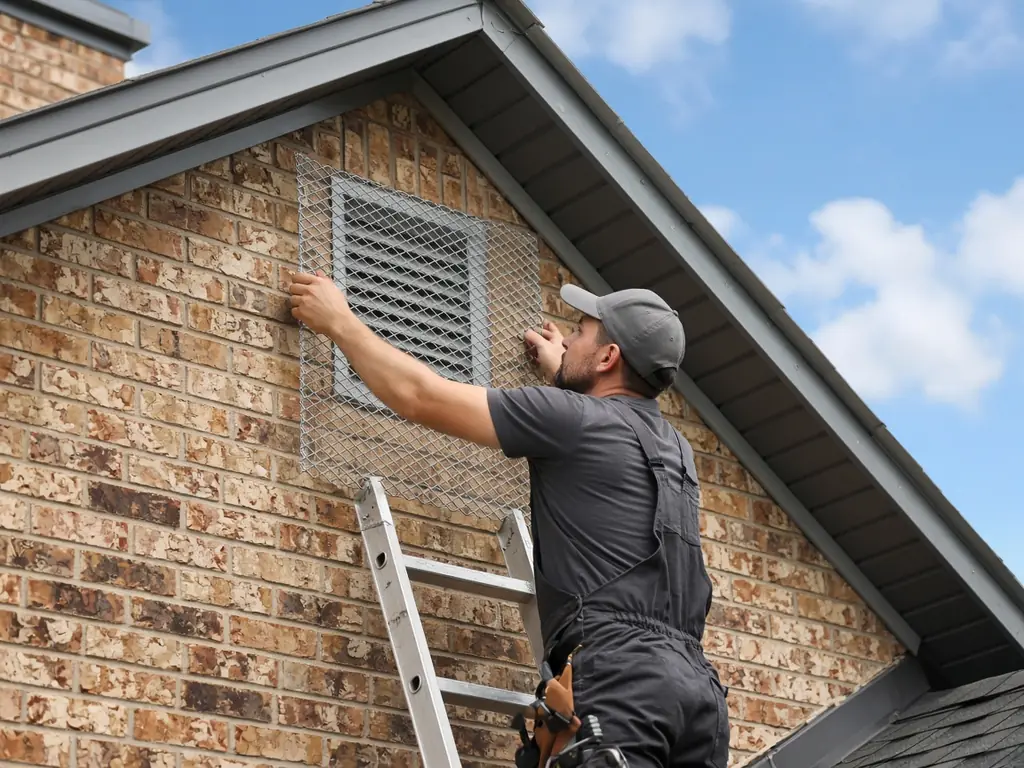
- Walk the whole envelope. Foundation, siding transitions, weep gaps, garage door, AC and gas lines, dryer and bath vents, soffits, roof returns, gable vents and chimney.
- Photograph and list every gap. You get the findings in writing, ranked by how likely rodents are to be using each one.
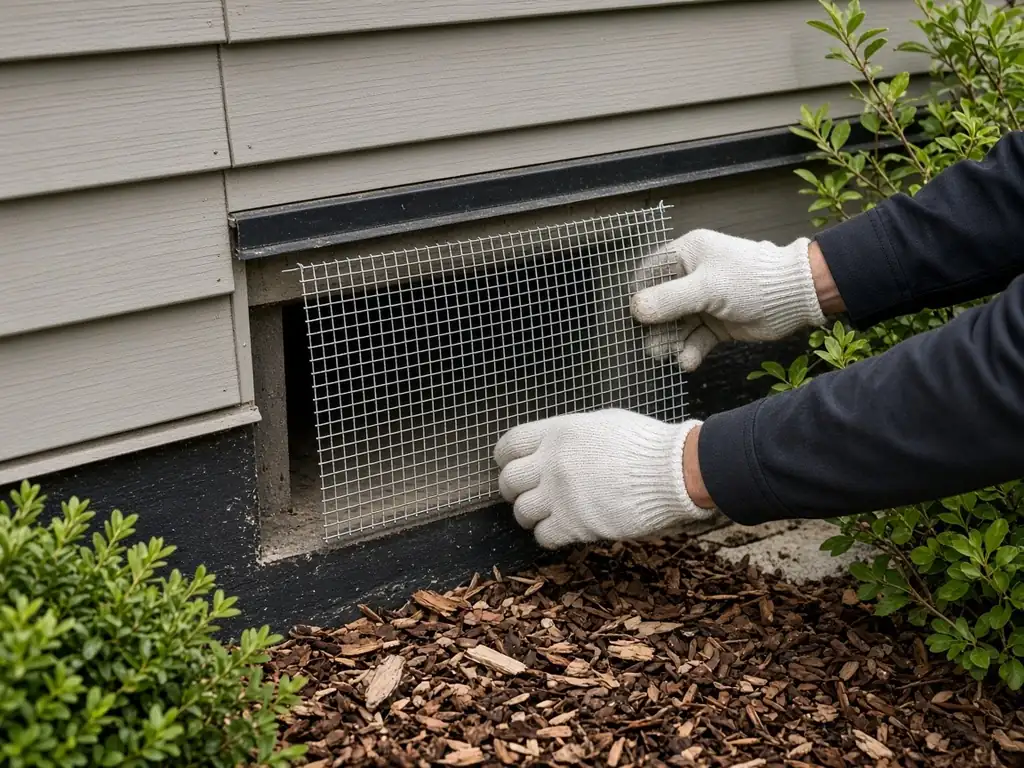
- Seal with rodent-proof materials. Copper or stainless mesh, hardware cloth, sheet metal, concrete patch, door sweeps and vent screens. Spray foam alone is not rodent-proof.
- Verify. Traps or monitors confirm nothing is still getting in. Any new activity is traced back and sealed.
Rodent Exclusion cost in Waterloo
Here are typical ranges for Waterloo. An older or larger home with more gaps sits toward the top; a new problem caught early sits toward the bottom.
| Item | Typical St. Louis-area range |
|---|---|
| Exclusion inspection with photos | Free with service |
| Basic sealing (garage, doors, utility lines) | $300 – $800 |
| Whole-home exclusion | $800 – $2,500 |
| Older homes with many gaps / roofline work | $2,500+ |
Ranges reflect typical prices in the St. Louis market. They are a guide, not a quote; your price depends on the inspection.
See the full St. Louis rodent control cost guide.
Local resources
For rats on public land, in an alley, on a vacant lot or on a neighbor's property in Waterloo, contact the Monroe County Health Department or your city's code enforcement. Rodents inside your own home or business are the owner's responsibility, and that is where we come in.
Rodent Exclusion near Waterloo
See also rodent exclusion across the St. Louis area.
Frequently asked questions
What does rodent exclusion include?
Finding and permanently sealing every gap a mouse or rat can use: foundation, garage, utility penetrations, vents, rooflines and chimneys. It is the step that stops repeat infestations.
Why not just use spray foam?
Rodents chew straight through plain expanding foam. Foam is fine as a filler behind mesh or metal, not on its own.
How small a gap can a mouse use?
About 1/4 inch, roughly the width of a pencil. Rats need about 1/2 inch.
Do you cover all of Waterloo?
Yes, all of Waterloo and nearby Floraville, Paderborn, Valmeyer.
Get a free rodent inspection
Tell us what you are seeing and where. We will book a free inspection with a licensed local technician.
Call (314) 735-5967